Gill and Kishan's 224-Run Stand Gives India a World Cup Batting Blueprint
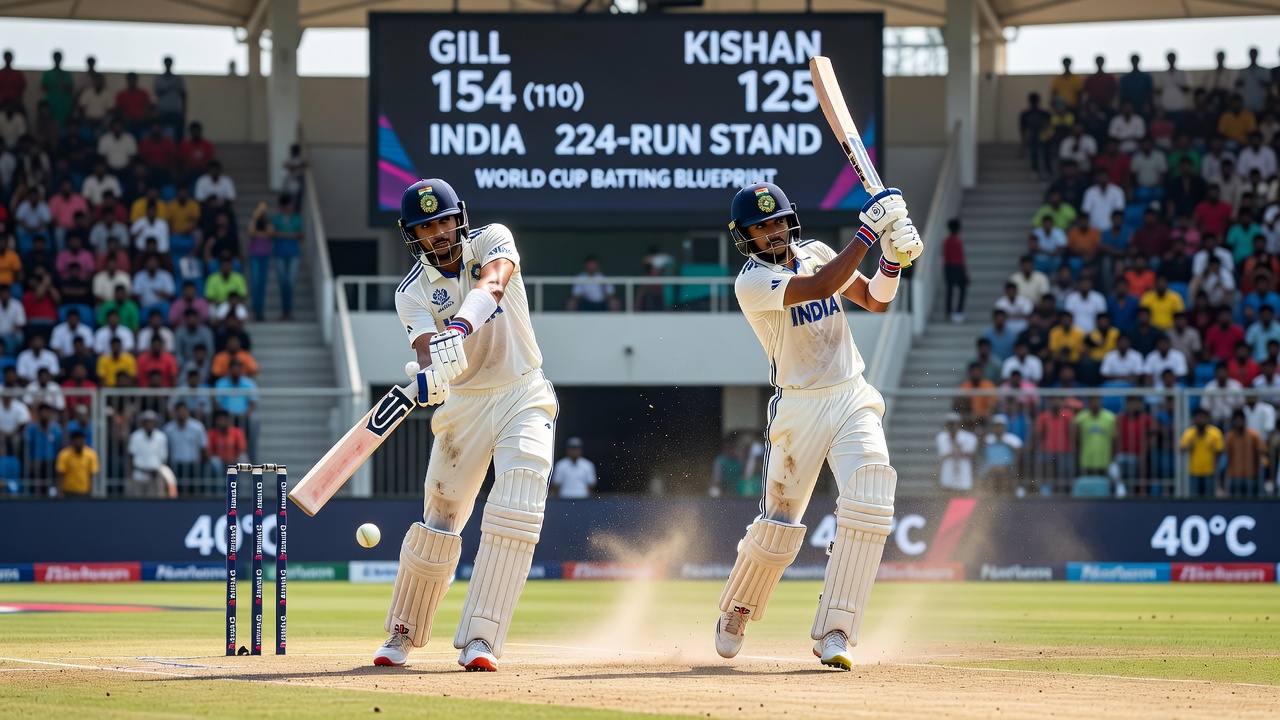
Shubman Gill's maiden ODI century as captain and Ishan Kishan's explosive second hundred lit up a sweltering Ekana Stadium in Lucknow as the pair combined for a 224-run third-wicket partnership against Afghanistan. The stand, built across 140 deliveries in temperatures exceeding 40 degrees Celsius, was more than a match-winning effort - it handed head coach Gautam Gambhir a compelling early answer to one of Indian cricket's more persistent structural questions ahead of the 2027 ODI World Cup.
The Left-Right Question India Has Been Asking
Gambhir's belief in the left-right batting combination has long defined India's T20I thinking, with Abhishek Sharma, Kishan and Tilak Varma all providing southpaw options in the top six. The ODI setup, by contrast, has skewed heavily toward right-handers since the 2023 World Cup cycle, prompting ongoing debate about how to introduce variety without disturbing a settled unit. Even during the Champions Trophy campaign, the team management found itself promoting Axar Patel to No. 5 simply to break up the monotony of a right-handed top order. It is worth noting that across cricket and beyond - whether analysing batting combinations or niche disciplines like sumo betting markets - the tactical value of contrast and disruption is a principle recognised well beyond the boundary rope. Virat Kohli's injury gave the thinktank an opening to experiment: Yashasvi Jaiswal opened alongside Rohit Sharma in Lucknow, pushing Gill down to No. 3, while Kishan slotted in at one drop. Jaiswal fell cheaply, but the experiment yielded something far more instructive lower down the order.
A Partnership of Contrasts, Built Under Fire
Gill walked in after Jaiswal's early dismissal and was immediately imperious. His cover drives were authoritative, his flicks and cuts precise, his judgement outside off stump immaculate. He finished with 154 off 110 balls, including 22 fours and two sixes - a captain's innings in the truest sense, even as severe cramping forced him to shift toward boundary-hitting in the final stages of his knock. He eventually fell miscuing a switch hit to the sweeper, having already crossed 150. Kishan's contribution was different in almost every dimension. He started cautiously, then accelerated dramatically, racing to his century off 71 balls - only the second ODI hundred of his career after his celebrated double century against Bangladesh in December 2022. His second fifty took just 19 deliveries. Where Gill's innings was classical and measured, Kishan's was combative and explosive, driven by a strong bottom hand and an appetite for the aerial route. He was dismissed for 125, caught at deep midwicket off Nangeyalia Kharote after striking 14 fours and seven sixes. The physical toll of playing in over-40-degree heat was visible throughout. Both batters battled cramps, called for fluids repeatedly between overs and wore ice packs around their necks. That they produced a partnership of this quality under those conditions only amplified its significance.
What the Stand Means for India's ODI Future
India's middle and lower order failed to convert the platform into the 450-plus total that had looked possible when both centurions were still at the crease, with wickets falling in clusters during the death overs. That finishing-order frailty is a separate conversation for the management to address. The headline finding from Lucknow, however, was structural. The right-left axis of Gill and Kishan consistently forced Afghanistan's bowlers to adjust their lines and lengths, unsettled field placements and denied the opposition any sustained rhythm. It offered Gambhir evidence - not just theory - that the ODI batting unit can carry the same disruptive quality that his T20I lineups have deployed for some time, without sacrificing the classical solidity that defines India's best ODI batting. With the 2027 World Cup cycle now properly underway, and with series defeats against Australia and South Africa still fresh in the memory, India need a cleaner template. On a brutal afternoon in Lucknow, Gill and Kishan may just have handed Gambhir the rough draft of one.