Ream To Oldest-Captain Record As U.S. World Cup Armband Turns 96
Ream To Oldest-Captain Record As U.S. World Cup Armband Turns 96
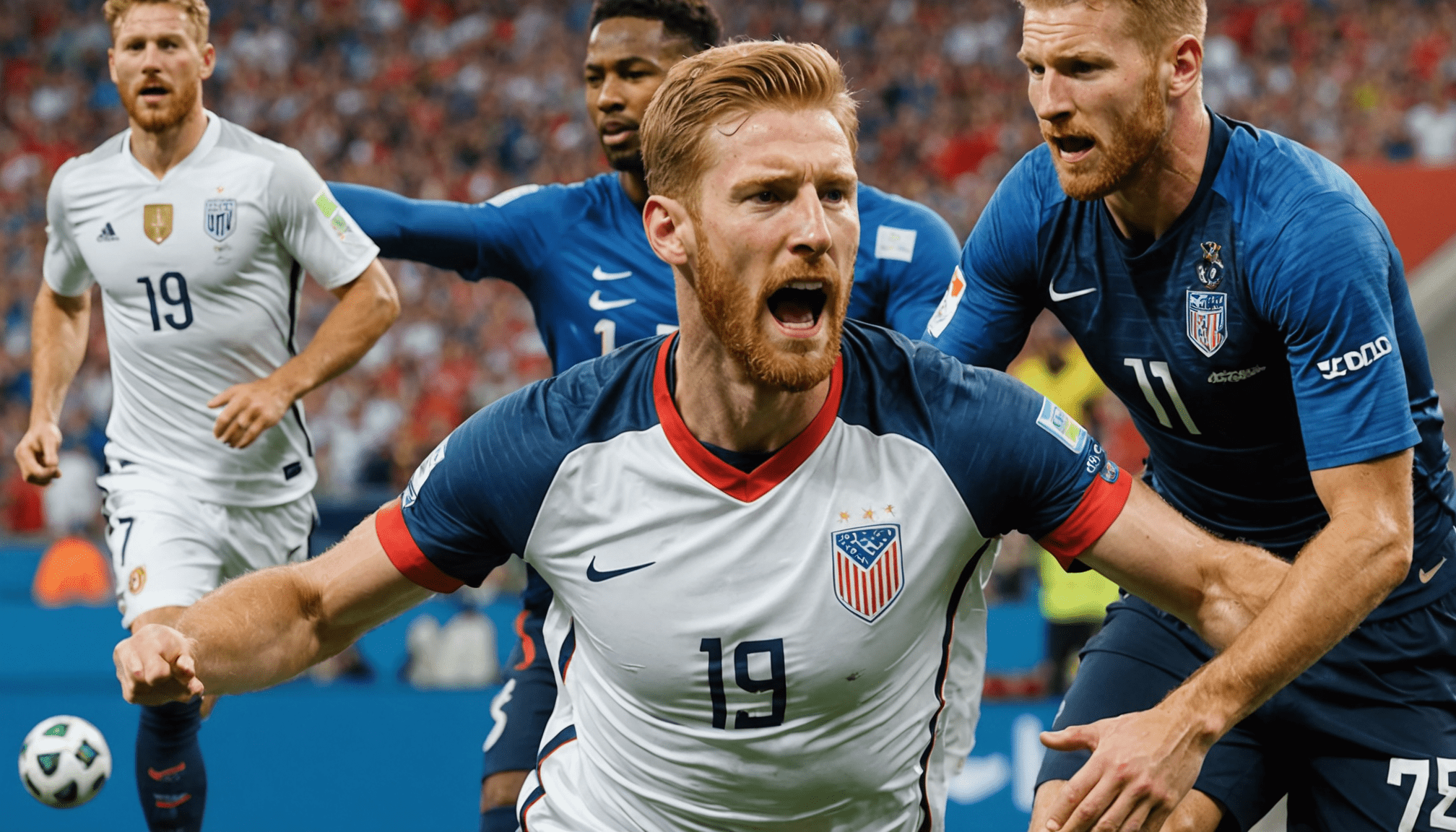
Tim Ream will captain the United States men's national team at the 2026 FIFA World Cup, becoming at 38 the oldest player to wear the armband for the U.S. at a men's World Cup. His selection continues a lineage of captains stretching back to the inaugural tournament in Uruguay in 1930, when the United States reached the semifinals - still the program's best-ever finish. The 2026 edition, co-hosted by the United States, Canada, and Mexico, will be the 12th time the U.S. has appeared at the tournament.
Each U.S. World Cup squad has produced a different captain, with two exceptions: the 1950 tournament, where Harry Keough, Ed McIlvenny, and Walter Bahr each wore the armband for one group-stage game, and Claudio Reyna, the only U.S. player to captain the team at two separate World Cups, in 2002 and 2006. The record across 12 tournaments reflects how the captaincy has tracked the broader evolution of the program - from semi-professional players in the 1930s to a generation competing in Europe's top leagues.
Thomas Florie, born in Harrison, New Jersey in 1897 to Italian immigrants, captained the 1930 side and scored in the team's 3-0 group-stage victory over Belgium. George Moorhouse, Liverpool-born and a veteran of Great Britain's World War I effort, succeeded him as captain for the 1934 tournament, a single-elimination format in which the U.S. fell 7-1 to hosts Italy in the first round. At the 1950 tournament in Brazil, the three-captain rotation produced the most celebrated result in U.S. soccer history: McIlvenny, a Scottish-born player who had featured for Wrexham before emigrating to the United States in 1949, led the team to a 1-0 victory over England in what remains one of the most significant upsets in World Cup history. Keough later built a coaching legacy at St. Louis University, winning five national titles, while Bahr went on to coach Penn State from 1974 to 1988 and was named College Coach of the Year in 1979.
The U.S. did not return to the World Cup until 1990, a 40-year absence. Center back Mike Windischmann, raised in New York City and a product of Brooklyn Italians and the 1988 Olympic team, captained a side that exited without a point. Goalkeeper Tony Meola carried the armband four years later on home soil at USA '94, his poise in goal and public profile helping to broaden domestic interest in the sport during a pivotal moment for soccer in the United States. Thomas Dooley, a German-born veteran who remains the only American player to have won the Bundesliga - with Kaiserslautern in 1990-91 - was handed the captaincy for the turbulent 1998 campaign in France after John Harkes was removed from the squad, a tournament the U.S. exited without a point following three group-stage defeats.
The modern captaincy era spans four players across five tournaments. Reyna, who in club football became the first American to captain a side in Germany's Bundesliga and was the first U.S. player named to a World Cup all-tournament team following the 2002 quarterfinal run, gave way to Carlos Bocanegra, who held the armband from 2007 through the 2010 World Cup - the first time the U.S. had won its group since 1930 - and finished his international career with 110 caps. Clint Dempsey captained the 2014 side in Brazil, scoring in the opening seconds of the first match against Ghana, and retired tied with Landon Donovan as the U.S. all-time leading scorer with 57 international goals. Tyler Adams, 23 at the time, captained the 2022 squad in Qatar, leading the team to the Round of 16 and earning U.S. Soccer's Male Player of the Year award for that year. Adams, currently with AFC Bournemouth, was not retained as captain for 2026.
Ream, a St. Louis native now with Charlotte FC in MLS, built his club career primarily in England with Fulham, where he joined a select group of Americans - among them Brian McBride, Bocanegra, Reyna, Dempsey, and Tim Howard - to have worn the armband in a Premier League match. His international debut came in 2010, meaning he will have represented the United States for more than 15 years by the time the 2026 tournament kicks off. The expanded 48-team format, making its debut at this edition of the tournament, gives the co-hosting U.S. side a guaranteed minimum of three group-stage matches on home territory, with the possibility of a deeper run in front of domestic crowds for the first time since 1994.