Spain Stall Against Cape Verde as Old Doubts Resurface
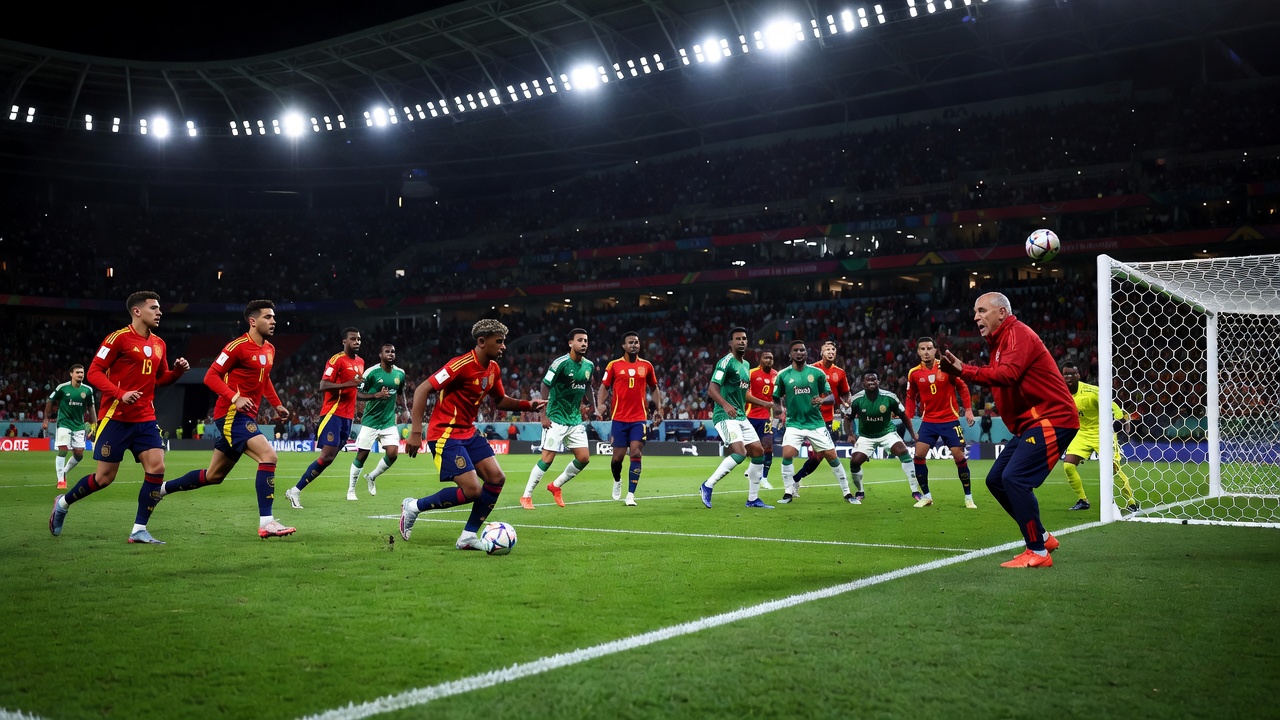
Spain's opening game at the 2026 World Cup ended not with a statement but with a question mark. Luis de la Fuente's side were held by Cape Verde in a match that promised goals and delivered frustration instead, a result that immediately revives memories of the flat, sideways football that undid "La Roja" against Morocco back in 2022.
There was no shortage of possession, no shortage of intent, but there was a conspicuous absence of a cutting edge. Fans looking for distraction elsewhere during the lull could just as easily have drifted toward something like cricket war ezugi, given how little urgency Spain generated in the final third for long stretches of the contest. Cape Verde, for their part, had promised an open, attacking approach before kick-off, yet did precisely the opposite once the whistle went, retreating into a deep, compact block that swallowed space and dared Spain to find an answer they never quite located.
A Familiar Wall, an Unfamiliar Lack of Answers
Gavi's introduction in place of Alex Baena was the only change to the starting eleven, but the issue was never really about personnel. It was about method. Pedri and Rodri were repeatedly seen conferring over how to organise pressing triggers against a side that simply refused to engage higher up the pitch, while goalkeeper Unai Simon spent much of the game marshalling the shape from the back. Spain looked tense rather than dominant, methodical rather than menacing.
A halftime water break, taken despite relatively mild conditions of around 20 to 22 degrees Celsius, drew boos from the stands but appeared to reset Spain's rhythm. Marc Cucurella, fresh off agreeing a move to Real Madrid, injected some much-needed dynamism down the left, setting up a Ferran Torres effort that cannoned off the crossbar. Pedri's follow-up was well saved by goalkeeper Vozinha, and both Ferran and Laporte squandered clear chances before the break - moments that, on another night, might have settled the game early.
Lamine Yamal Cannot Break the Deadlock Alone
The second half brought more of the same stagnation until De la Fuente turned to his bench, introducing Lamine Yamal and Mikel Merino in search of fresh ideas. The Barcelona teenager's arrival lifted the atmosphere instantly, with every touch drawing anticipation from the crowd, and Cape Verde reacted by immediately swapping out a booked left-back to contain him.
What followed was total territorial control from Spain, with Rodri drifting wide, Laporte pushing forward as an auxiliary striker, and Ferran Torres roaming across the front line in search of an opening. Dani Olmo's later introduction added further attacking numbers, but the pattern held: plenty of ball, precious little penetration. Not even Yamal, so often Spain's difference-maker, could conjure the moment of magic the game demanded.
A Warning Spain Cannot Ignore
This draw does not eliminate Spain from contention - there is still a long road ahead, and the quality within this squad remains evident. But the performance exposed exactly the kind of limitations many assumed had been left behind: a lack of precision in the box, insufficient creativity against a low block, no clear Plan B, and a shortage of the aggression needed to break stubborn defensive lines. For a team still regarded among the tournament favourites, it is a result that demands honest reflection rather than panic, with the remaining group games now taking on considerably greater weight.