Osaka Stuns Sabalenka at Wimbledon to Reach First Quarter-Final
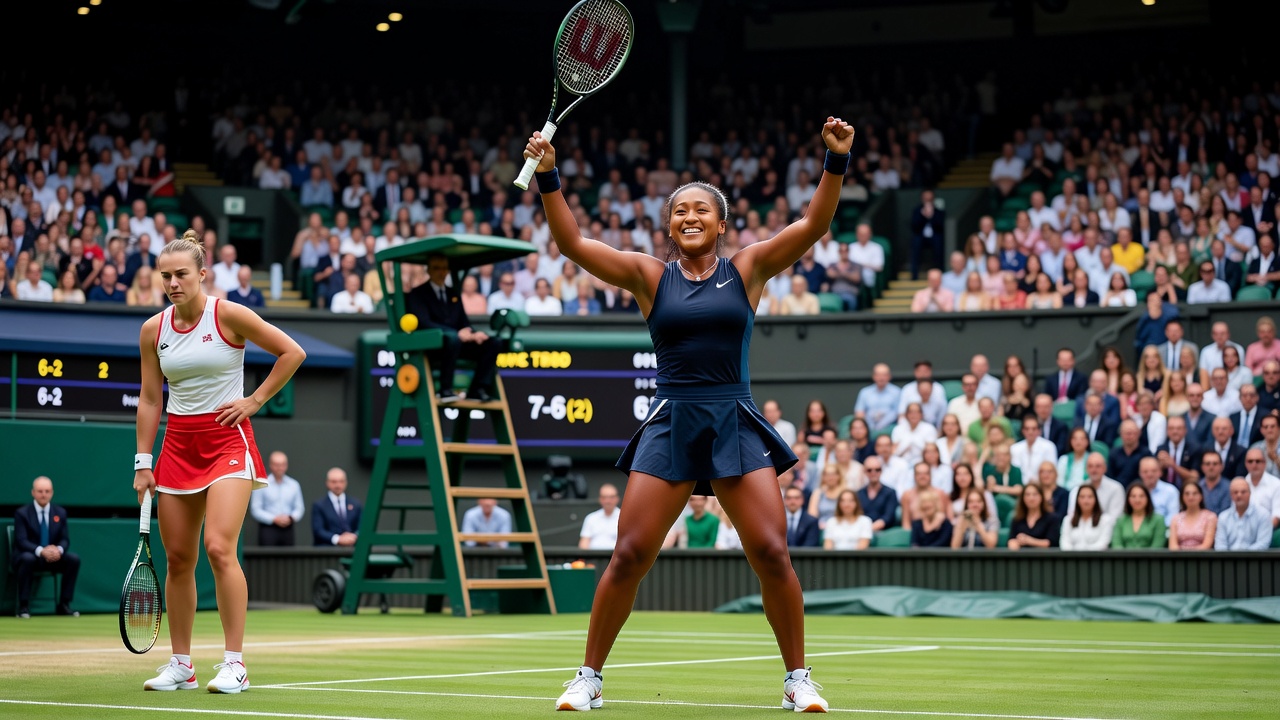
Naomi Osaka produced one of the most significant results of her comeback on Monday, defeating world number one Aryna Sabalenka 6-2, 7-6(2) on Centre Court to advance to the Wimbledon quarter-finals for the first time in her career. The victory, delivered on Day Seven of the tournament, announced Osaka's return to the highest level of the game with unmistakable clarity. Between them, these two players carry eight Grand Slam titles - and for the better part of two sets, it was the Japanese four-time major champion who dictated terms.
A First Set That Left No Room for Doubt
Sabalenka arrived at Centre Court as the tournament's most feared ball-striker, a player whose flat, heavy groundstrokes have dismantled opponents on every surface. None of that was on show in the opening set. Osaka neutralised the Belarusian's power early, moving the ball with precision and refusing to be drawn into baseline exchanges on Sabalenka's terms. The set was over in 32 minutes, a scoreline of 6-2 that reflected a performance as controlled as it was assertive. For those tracking Osaka's progress since her return to the tour following the birth of her daughter, the SapphireBet blog and other tennis-focused platforms had flagged her improving form coming into the second week, though few anticipated a display of this authority against the world's top seed.
Second Set Tiebreak Ends a Remarkable Sabalenka Streak
The second set offered the competitive contest that Sabalenka's ranking and reputation demanded. She steadied, found more depth on her groundstrokes, and pushed the match to a tiebreak. But Osaka did not flinch. She won the tiebreak 7-2, a commanding margin that ended Sabalenka's streak of 21 consecutive Grand Slam tiebreak wins - a run that had become one of the more remarkable statistical landmarks in women's tennis in recent years. To end it in the fashion Osaka did, with clean winners and composed decision-making under pressure, underlined the quality of the performance across the full two sets.
The Significance of Osaka's Comeback Narrative
Context matters here. Osaka stepped away from the tour to have her first child and her return to competition has been watched closely, both for what it means to her personally and for what it signals about the evolving demands on professional athletes who choose to combine elite competition with motherhood. A fourth-round win over a world number one on the grandest grass court in tennis is not a result that requires asterisks or qualifications. This is Osaka's most significant victory since her comeback began, and her first appearance in a Wimbledon quarter-final marks a genuine milestone in a career that has already produced four Grand Slam titles across the Australian Open and US Open. Sabalenka, for her part, was visibly frustrated throughout, a sign not of any mental fragility but of how thoroughly her opponent managed to disrupt her rhythm and impose a different tempo on proceedings.
What Comes Next
Osaka's run now positions her as a genuine contender in the bottom half of the draw, with the quarter-final representing uncharted territory at Wimbledon. Her game on grass has historically been less consistent than on hard courts, which makes this run all the more notable. For the tournament, the elimination of Sabalenka at the fourth-round stage reshapes the seedings picture and opens an opportunity for players further down the draw. Osaka's ability to hold her level across a full quarter-final, and potentially beyond, will define how far this story travels in the coming days.
(With inputs from agencies.)