Mbappe Breaks France Record as Les Bleus Turn on the Style Against Senegal
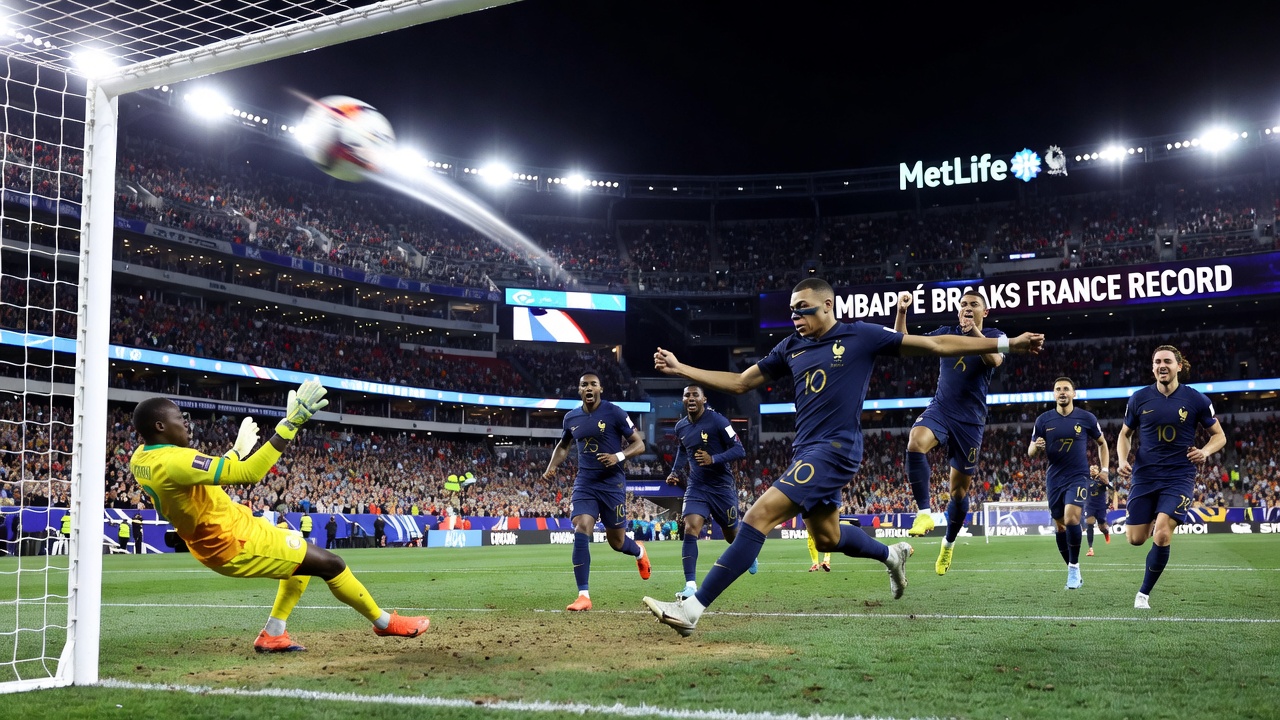
France laboured through a difficult first half but delivered a commanding second-half performance to defeat Senegal 3-1 at MetLife Stadium in New Jersey, with Kylian Mbappe scoring twice and Bradley Barcola adding a third to justify their status as many people's pick to lift the World Cup. The result was not as straightforward as the scoreline suggests - Senegal were the better side before the break and had genuine cause for grievance over a crucial refereeing decision - but France's quality ultimately told.
The win moved Mbappe past Olivier Giroud as France's all-time leading scorer, the Real Madrid forward now standing alone on 58 international goals. He also reached 14 World Cup goals, placing him joint-third on the all-time list alongside Gerd Müller, with only Miroslav Klose (16) and Ronaldo (15) ahead of him. The records keep coming for the 25-year-old, and on nights like this, when the machine clicks into gear, he remains the most compelling individual argument for France going all the way. Elsewhere in the combat sports world, fans searching for where to bet bkfc have been discovering that the appetite for high-stakes action extends well beyond the football pitch this summer.
A Slow Start and a Disjointed First Half
For the opening 45 minutes, this looked nothing like a team of champions in waiting. France were sloppy in possession, frequently surrendering the ball in midfield and losing individual duels across the pitch. Senegal, organised and energetic under head coach Pape Thiaw, were the more purposeful side. Nicolas Jackson's low shot clipped Maignan's near post and bounced clear - fortunately for France - and Ismaila Sarr wasted a glorious chance by shooting over from inside the box after being teed up by Sadio Mane. A first-half Senegal lead would have been entirely deserved.
Part of France's first-half difficulty stemmed from a familiar tactical tension. Where does Mbappe operate most effectively - as a central striker or from his preferred wide-left position? And can Michael Olise, who has been outstanding drifting through central zones for Bayern Munich this season, replicate that influence from a wider berth for the national side? Those questions went unanswered before the break. The automatisms - the instinctive positional understanding that elite club partnerships develop over time - were simply not firing.
France Find Their Rhythm and Mbappe Finds the Net
The second half brought a different team onto the pitch, at least in terms of intent and organisation. Deschamps made positional adjustments that freed Olise to collect the ball in more dangerous areas, and Edouard Mendy was twice forced into sharp saves as France began to assert control. With 66 minutes played, the breakthrough came: Olise threaded a brilliant through ball into the area and Mbappe turned it home. The record was broken, and France had the foothold they needed.
Substitute Bradley Barcola settled the contest nine minutes from time, chipping elegantly over Mendy after Adrien Rabiot slid him through. Senegal did pull one back - Ibrahim Mbaye producing a thumping near-post finish to beat Maignan - but Mbappe had the final say with a blistering long-range strike that brought the house down and wrapped up a dominant closing spell.
The Penalty That Wasn't - and Why It Matters
Before France found their groove, the game was briefly engulfed in controversy. Mane slid in on Mbappe inside the penalty area in what, on multiple replays, appeared to be a clear foul. Referee Alireza Faghani waved play on. VAR intervened, Faghani consulted the pitchside monitor - and then upheld his original decision, ruling that Mbappe had initiated the contact. The stadium erupted in confusion. French supporters had begun celebrating what they believed was a penalty award; Senegal fans were given a late reprieve.
It was a curious call by any standard, and one that will fuel debate. Faghani, Iranian-born and Australia-based, is officiating in his fourth World Cup - a record in itself - though his tournament in Qatar ended with scrutiny over his performances. Whether FIFA's review processes lead to further consequences remains to be seen. The decision was ultimately irrelevant to the outcome, as France scored regardless, but it added another chapter to Senegal's ongoing experience of contentious officiating in major finals, following the disputed penalty in the Africa Cup of Nations final against Morocco earlier this year.
Senegal Have Enough to Recover - But Thiaw Has Decisions to Make
Defeat will sting, but Senegal showed enough to suggest they can progress from the group stage. Krepin Diatta was a constant menace down the right, El Hadji Malick Diouf delivered quality crosses, and Sarr was dangerous on the counter throughout. Jackson's movement and link-up play caused France's defenders problems. The collective defending of Kalidou Koulibaly and Moussa Niakhate shored up the central areas when the midfield was under pressure.
But Thiaw faces a genuine dilemma heading into the next group game against Norway. Mane, now 34, had a difficult evening - not only the rash challenge on Mbappe but several moments where his decision-making let teammates down. Iliman Ndiaye, who has had an excellent season for Everton, was left out of the starting XI entirely. The case for starting Ndiaye alongside Jackson and Sarr is growing louder, and Thiaw may need to be bold enough to act on it. Senegal are not out of this tournament, not by a long way. But they will need to be sharper against a Norway side who will fancy their own chances.
One subplot that refuses to go away is the condition of the MetLife Stadium pitch. Following Brazil's draw with Morocco on the same surface, Vinicius Junior publicly flagged that the grass was drying out rapidly, slowing the game and disrupting attacking play. Against France and Senegal, the problems were still visible - seams between turf rolls evident from the press box, groundstaff working through half-time to patch and dampen the surface. With the World Cup final scheduled for the same venue on July 19, the question of whether the pitch can hold up for the remainder of the tournament is no longer background noise. It is front and centre.